
What is GEO Optimization? The Complete 2026 Guide
Learn what GEO (Generative Engine Optimization) is and how to optimize your website for AI search engines like ChatGPT, Claude, and Perplexity.
Key Takeaways
- GEO (Generative Engine Optimization) is essential for visibility in AI search results
- AI search is growing rapidly—40% of Gen Z prefers AI chatbots over traditional search (Gartner)
- The five key components of GEO are: schema markup, FAQ optimization, content structure, entity recognition, and conversational tone
- GEO complements traditional SEO rather than replacing it
- Running a GEO audit is the first step to understanding your optimization gaps
What is GEO Optimization?
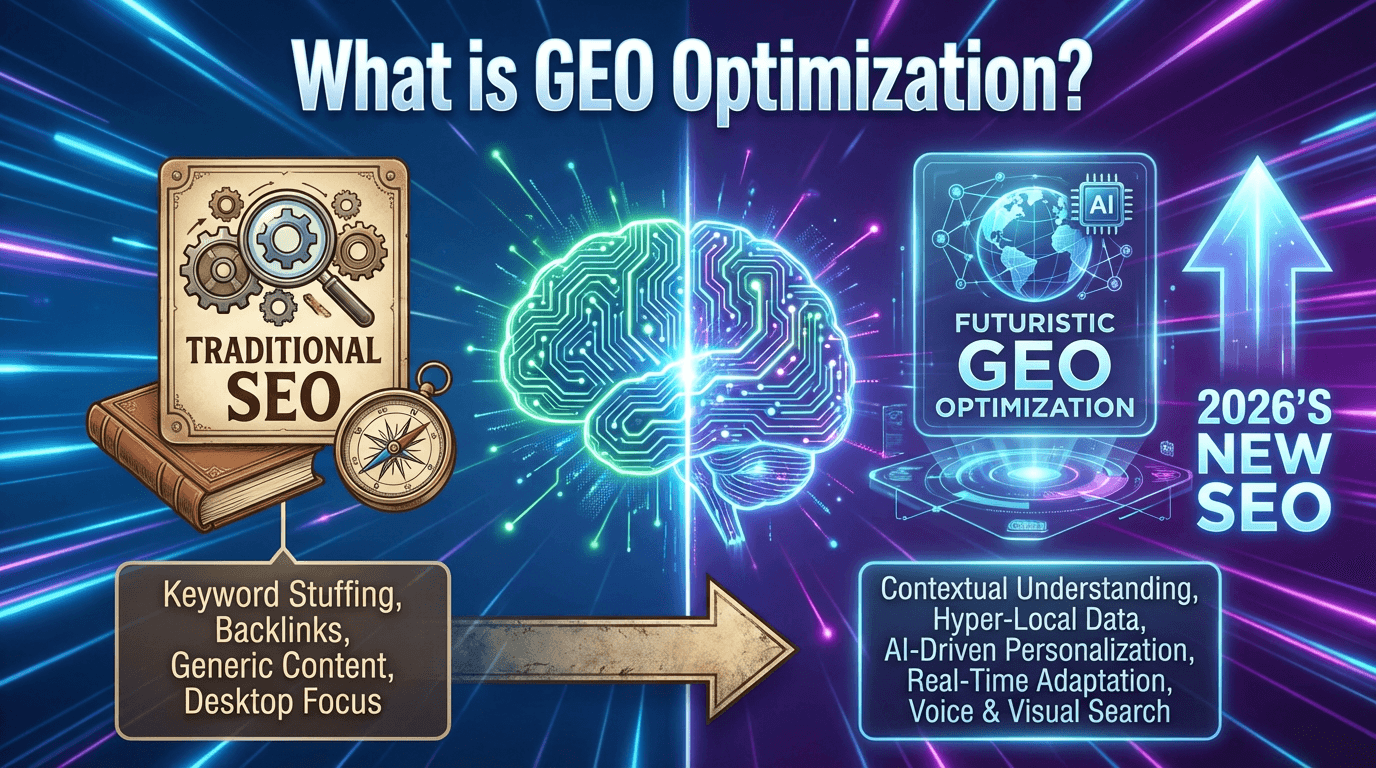
Last updated: January 2026GEO (Generative Engine Optimization) is the practice of optimizing your website and content to be discovered, understood, and cited by AI-powered search engines and language models. Unlike traditional SEO which focuses on ranking in Google's blue links, GEO ensures your content appears in AI-generated responses from tools like ChatGPT, Claude, Perplexity, and Google's AI Overviews.
In simple terms: GEO is SEO for the AI age.
Why GEO Matters in 2026
The way people search for information is fundamentally changing. Consider these statistics:
- 40% of Gen Z now prefer using AI chatbots over traditional search engines (Source: Gartner, 2025)
- 65% of Google searches result in zero clicks due to AI Overviews
- AI search queries are growing 400% year-over-year (Source: Semrush, 2025)
- By 2027, traditional search traffic is expected to decline by 25% (Source: Forrester, 2025)
If your website isn't optimized for AI search engines, you're becoming invisible to a growing segment of your potential customers.
How GEO Differs from Traditional SEO
While GEO and SEO share some common principles, they have key differences:
The 5 Key Components of GEO
1. Schema Markup Implementation
Schema markup helps AI systems understand your content's context. Essential schema types include:
- Organization Schema: Establishes your brand identity
- FAQ Schema: Makes Q&A content easily extractable
- Article Schema: Helps AI understand your content type
- Product/Service Schema: Clarifies your offerings
2. FAQ Optimization
AI systems love well-structured FAQs because they provide direct answers to user questions. To optimize your FAQs:
- Use natural, conversational question formats
- Provide comprehensive 40-60 word answers
- Include relevant keywords naturally
- Structure with proper HTML markup
3. Content Structure for AI
AI systems extract information differently than humans scan pages:
- Start paragraphs with direct answers
- Use clear, descriptive headings as questions
- Include definitions near the beginning of sections
- Create "cite-worthy" standalone sentences
4. Entity Recognition
Help AI systems understand what your content is about:
- Clearly define your brand, products, and services
- Use consistent naming throughout your site
- Link to authoritative sources that define key concepts
- Create clear relationships between entities
5. Conversational Tone
AI systems are trained on natural language, so content that sounds conversational is more likely to be cited:
- Write like you're explaining to a colleague
- Avoid jargon unless you define it
- Use first and second person where appropriate
- Break complex topics into digestible pieces
How to Check Your GEO Score
The fastest way to understand your current GEO optimization status is to run a free audit. Our GEO audit tool analyzes:
- Schema markup implementation
- Content structure and format
- FAQ optimization
- Entity clarity
- Technical SEO foundations
The audit provides a score out of 100 and specific recommendations for improvement.
Getting Started with GEO
Here's a simple action plan to start improving your GEO optimization:
- Run a GEO Audit - Understand your current score and gaps
- Implement Basic Schema - Start with Organization and FAQ schema
- Restructure Key Pages - Update your most important pages with Q&A format
- Create Answer-Focused Content - Write content that directly answers common questions
- Monitor AI Citations - Track when and how AI systems mention your brand
The Future of GEO
As AI search continues to evolve, GEO will become increasingly important. Early adopters who optimize now will have a significant advantage as traditional search traffic continues to shift toward AI-powered interfaces.
The businesses that thrive in this new landscape will be those that understand both traditional SEO and GEO optimization, creating content that serves both human readers and AI systems effectively.
Frequently Asked Questions
What does GEO stand for?
GEO stands for Generative Engine Optimization. It refers to the practice of optimizing websites and content to be discovered and cited by AI-powered search engines and language models like ChatGPT, Claude, and Perplexity.
Is GEO replacing SEO?
GEO is not replacing SEO but complementing it. While traditional SEO remains important for Google rankings, GEO addresses the growing segment of users who search through AI interfaces. The most effective strategy combines both approaches.
How long does it take to see GEO results?
GEO results can vary, but most websites see improvements in AI citations within 4-8 weeks of implementing optimizations. Schema markup changes can be reflected almost immediately, while content restructuring takes longer to be indexed by AI systems.
What is a good GEO score?
A GEO score of 70 or above is considered good, while scores above 85 are excellent. The average website scores around 38/100, indicating significant room for improvement for most businesses.
Can I do GEO optimization myself?
Yes, many GEO optimizations can be done yourself, especially basic schema markup and content restructuring. However, comprehensive optimization often benefits from professional expertise, particularly for technical implementations and competitive industries.
Topics
Ready to Optimize Your Site for AI Search?
Get a free GEO audit and see your optimization score in 90 seconds.
Start Free Audit